Ch.3: The Architecture of Attention

Attention – At Tension, At the Needle Point
We did not speak directly of attention yet, however – everything we explore begins exactly here. In English, the word itself reveals two truths:
At-tension
Attention is tension directed.
It is the moment when our inner field tightens around a point,
holds it, engages it – a subtle contraction, the gathering of force.
In this sense, attention is an energetic tension arc inside the mental space: a bowstring pulled back, ready to shoot meaning into form.
A needle point of focus
Attention is also the opposite: not contraction, but extreme precision.
A single point so sharp that everything unnecessary falls away –
the world of noise dissolves; only the chosen direction remains.
Both of these meanings coexist.
Attention is tension and precision – the power to hold, and the power to cut.
And this dual nature is exactly why attention forms the architecture of mental space.
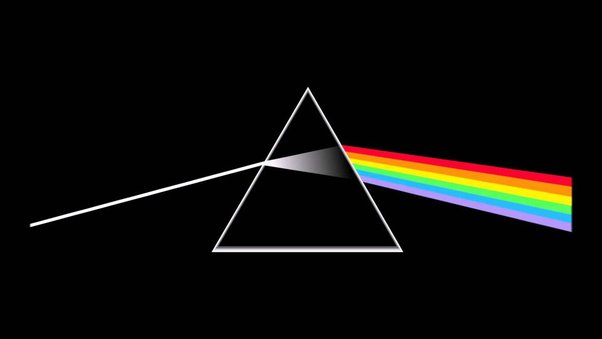
Where attention goes, structure appears – where attention disperses, structure collapses.
Everything we call “mental life” – thoughts, ideas, habits, loops, clarity – is shaped by how well we can direct, relax, and reclaim attention.
The Physics of Attention: How Observation Shapes Reality
We often treat attention as if it were only a psychological function – a type of mental spotlight.
But attention is far more than that.
It is a physical force that shapes reality at the most fundamental level.
- Every spiritual tradition hinted at this.
- Every magician knew it.
- Every clairvoyant uses it.
- And modern physics, despite itself, has confirmed it.
Attention does not merely notice reality – it selects it.
To understand this, we must step briefly into the quantum world, where reality behaves more like a possibility-field than a fixed structure.
1. The Double-Slit Experiment – A Possibility Until Observed
This famous experiment showed something astonishing:
- When no one looks, particles behave as waves – meaning all possibilities exist at once.
- When observed, the wave collapses into a single path – meaning attention chooses one outcome.
In other words:
- Without attention there are infinite potentials.
- With attention those narrow into one reality.
This is the first scientific demonstration of what the Field has always known:
attention collapses the wave into form.
- In Field-language: attention is the sculptor of the mental – and so also physical – space.
- In physics: the observer determines the outcome.
2. The Observer Effect – Attention Is Interaction
The quantum world reveals a deeper truth:
- To observe something is to interact with it.
- Attention is not passive – it is a force exchange.
When we focus on something, we aren’t just watching – we are participating, changing the probability landscape with our presence.
This is why scattered attention produces scattered outcomes,
and why focused attention produces clarity and structure.
- Physics calls it the observer effect.
- The Field calls it contact.
Psi-Physics – How Focus Becomes Force
While quantum physics shows how observation shapes possibilities, some researchers went further – into how the human mind directly participates in this process in everyday life.
One of them is Tim Rifat, whose work explores consciousness not as philosophy, but as applied physics of attention.
His terminology may sound technical, but the underlying mechanics are something everyone already knows from simple human experience.
To simplify his findings into something anyone can understand:
1. Attention is not just “looking” – it is an active signal.
When you focus on something, you do not simply see it – your mind sends out a kind of directional pressure.
Rifat calls this a scalar field emission – a subtle, non-electromagnetic signal generated by consciousness.
Most people have felt this without knowing the term:
- the moment someone stares at you from behind
- the way animals react before you make any sound
- how the atmosphere shifts when someone enters a room
- how someone “thinking of you” reaches you before the message does
This is your scalar attention interacting with another field. It is psi-physics, but you live it every day.
2. Emotion adds intensity.
Strong emotion – calm or turbulent – amplifies attention.
This is why:
- fear sharpens awareness,
- love makes perception brighter,
- anger makes your presence “pushier”,
- excitement accelerates inner movement,
- deep calm expands perception.
Emotion is the fuel of the attention-field.
In technical terms, it increases energy density in the psi-field.
Nothing occult – just physiology interacting with subtle physics.
3. Will gives direction.
Will is not force or squeezing.
It is simply decision that holds steady.
When you say:
- “I am doing this now,”
- “I am looking here,”
- “I am sensing this,”
you are creating field dominance –
the ability of one intention to stabilize the outcome.
Emotion is the fire.
Will is the steering wheel.
4. Clarity determines strength.
If your mind is scattered, then your attention is weak –
if your mind is quiet, attention becomes powerful.
This is why Bardon insisted on:
- stillness
- observation
- selective silence
Clarity strengthens the scalar field – Rifat calls this psi-coherence.
Think of it like water:
- muddy water cannot reflect
- clear water becomes a mirror
- still water becomes a lens
The clearer the mental space, the stronger the attention-field.
5. Focused attention changes probability.
Everyone has experienced this:
- when you are thinking intensely of someone and they suddenly call,
- when you are focusing on a problem and a solution appears,
- when you put intense attention to something and objects “respond” subtly,
- when you take a strong decision and circumstances rearrange,
- when you hold your intention steadily and synchronicities appear.
This is not a coincidence.
It is probability shaping – what Rifat, in technical language, calls:
- PK (psychokinesis)
- probability collapse
- psi-push
- scalar imprinting
- field modulation.
But it is also the simplest thing in the world – your attention influences what becomes real. Telekinesis, clairvoyance, intuition, manifestation – these are just specialized forms of the same mechanism:
Focused attention becomes force.
6. Everyday Examples (non-technical).
Just to show how natural this really is:
- You sense someone’s mood before they speak,
- You can “feel” when someone is lying,
- A room feels different after a fight,
- Your presence can calm or disturb others,
- Children and animals respond to your inner state,
- Your thoughts shift the atmosphere around you.
These are not metaphors.
They are micro-expressions of the same psi-physics that underlies:
- quantum observation
- telekinesis
- psychic intuition
- magical ritual
- manifestation
- Field contact
- true prayer
- and real healing
The difference is only intensity and clarity.
7. Why this matters?
All of this shows something extremely simple and extremely important:
Attention is a physical force in the Field.
Not symbolic. Not metaphorical. Not psychological.
Physical.
This means:
- scattered attention will cause a scattered life,
- hijacked attention will result in hijacked outcomes,
- trained attention will bring about chosen outcomes,
- still attention will allow for direct influence on matter
This is why the system tries to fracture attention constantly –
a sovereign attention is immune to manipulation.
This is also why Bardon begins with – and constantly reminds his students of – practice with thought discipline:
to restore the original ability to choose what your mind emits.
Because once attention stabilizes, the entire architecture of the mental space stabilizes with it.
According to Rifat, a trained mind does not “visualize” – it pressurizes reality.
It creates tension in the field —
exactly what the etymology of “attention” already reveals:
- at-tension:
- tension toward
- tension applied
This matches perfectly the earlier concept – attention is a tension arc inside the mental space. Rifat simply expresses it in psi-physics, while we use Field-language.
Cyclomancy — How Intention Becomes Movement
Cyclomancy, in its original form, was written as a dramatic “secret science” of psychic power by Frank Rudolph Young. But beneath the old language lies a simple truth:
Cyclomancy is the training of attention until it becomes force.
Not magic. Not fantasy.
Not even belief.
It is really much similar to what Shaolin monks train and achieve through discipline and trainings.
Just a mind that has become coherent enough to influence the field around it, and through that, matter.
Where psi-physics explains the theory, Cyclomancy provides the method.
1. Everything in Cyclomancy begins with a clear inner image
Not imagination – clarity.
You begin with:
- the object
- the intended motion
- the direction of movement
- the feeling-tone of “This is happening”
This is not about seeing pictures in your head. It is about orienting the mind toward an outcome – the same way you orient your body before taking a step in everyday life. The image sets the vector.
2. Emotion supplies the energy
Emotion in Cyclomancy is not dramatic intensity – it is felt certainty.
- A calm inner “yes.”
- A quiet willingness.
- A steady tone.
- A lack of resistance.
In technical terms, emotion provides the energy density of the field.
Young called this “vital energy,” but it is better understood as psi-pressure – the strength of focus behind your attention. Soft, steady emotion works best. It keeps the field open and responsive.
3. Attention becomes the bridge into the physical
This is the heart of Cyclomancy:
Attention connects your inner image to the external world.
When you hold attention on the motion – without strain, without hurry, without pushing – your mind creates a directional current.
Young described it as:
- the mental ray
- the psychic current
- the force of the thought
In our updated terms, this is simply:
- the scalar attention-field, directed without disruption,
held with clarity and stabilized by breath.
The attention-field is the carrier wave that communicates intention to matter.
4. Relaxed certainty (not effort) is the key
This is where almost everyone fails:
Effort collapses the field. Strain breaks coherence.
Trying too hard disconnects the current.
Cyclomancy teaches:
- relax the muscles
- soften the breath
- keep the mind quiet
- remain attentive, not tense
- allow, do not force
The correct inner state is: calm, focused, non-demanding presence.
Exactly the same inner state that is required in:
- meditation,
- prayer,
- martial arts,
- precise artistic work,
- animal communication,
- telepathic sensing.
Effort fights the field. Certainty opens it.
5. The first movements are small — and they matter
Cyclomancy does not start with dramatic telekinesis.
It starts with:
- a wobble
- a tilt
- a shift of weight
- a small rotation
- a change in how the object “feels” in space
- a micro-adjustment in the field
These tiny movements are not failures. They are proof.
They show:
- the connection is real
- the field is responding
- your attention has traction
- the signal is being received
Telekinesis always begins subtly. The body-field learns first. The object follows later.
6. Telekinesis is probability becoming motion
When intention, emotion, attention, and clarity align, something simple but profound happens: the field around the object of interest shifts.
The object then moves because the field has moved first.
That is all telekinesis is. Young described this in poetic language.
Modern psi-theory calls it:
- probability collapse →
- micro-PK →
- field dominance →
- scalar pressure.
In Field terms: the mind reorders possibility, and possibility crystallizes into form.
There is nothing supernatural here. Just a coherent mind interacting with a responsive world.
7. Why we included the Cyclomancy in this article
Cyclomancy is not here to teach telekinesis. It is here because it demonstrates – more visibly than anything else – how
- attention
- intention
- emotion
- clarity
- breath
- and mental stillness become a unified architecture.
Cyclomancy proves our core thesis:
- Attention is the first architecture of reality.
- When attention becomes coherent, reality responds.
- Telekinesis is simply attention that has become dense enough to touch matter.
Everything else in this chapter –
from rituals to Bardon, from mental hygiene to sovereignty –
is built on this same principle.
Cyclomancy simply gives you the most physical demonstration of how attention influences real material levels of life.
And anyone who practices Cyclomancy quickly notices:
the real challenge is not “moving objects” –
It is holding attention steady long enough to let the Field respond.
Cyclomancy proves in the physical realm what the Field shows in the inner realm:
- Attention is directional force.
Clairvoyance – Attention as Perception of the Field
Clairvoyance (in its real form, not pop versions) is the sensory inversion of telekinesis.
- Telekinesis = attention shapes matter
- Clairvoyance = attention senses the field before matter
Both rely on the same principle:
- The mental space is nonlocal.
- Attention can reach where the body cannot.
A clairvoyant is simply someone who has learned not to collapse the wave too early – they can keep their attention receptive, open, precise, and uncollapsed long enough to perceive information-in-potential.
In Field terms:
Clairvoyance is the ability to feel the structure before it becomes form.
This is why clairvoyants describe their insights as:
- impressions,
- currents,
- directions,
- textures,
- shifts in tone,
- fields of probability.
Not “visions” or “fantasies.”
They are perceiving the architecture of the mental space itself.
Why All of This Matters for Everyday Life:
This is not an abstract explanation –
it images why your life changes when your attention changes:
- If your attention is scattered then your field collapses into random outcomes,
- If your attention is hijacked then your field collapses according to someone else’s intention,
- If your attention is coherent your field begins to shape reality deliberately,
- If your attention is trained your life becomes a chosen trajectory rather than an accident.
This is why the system tries so hard to keep attention fractured –
a sovereign attention is immune to manipulation.
This is also why Bardon begins his entire training with thought discipline.
Without attention, nothing is possible. With attention, everything is possible.
Attention as the First Craft of Sovereignty
Now the earlier statement becomes literal, not metaphorical:
- Where attention goes, structure appears.
- Where attention collapses, structure dissolves.
Attention is not “awareness” or “focus” in the psychological sense.
It is the needle point where the Field meets the world.
It is the hinge between possibility and manifestation,
a steering wheel of the mental space.
And this is why “the autopilot” is so dangerous –
when attention is absent, probability is chosen for us.
When attention returns, the wave returns —
and the being becomes sovereign again.
Now let’s expand on the earlier mention of Franz Bardon in his practice of mental discipline.
Bardon’s Thought Discipline
We already introduced Bardon’s first step in mental hygiene:
Take a few minutes each day and observe your thoughts –
without judgment, without attachment.
Do not follow them. Do not fight them.
Just witness.
Observing thoughts without attachment builds the foundation.
It restores the natural position of awareness as witness rather than as follower.
This is where sovereignty begins.
But Bardon’s discipline does not stop there.
Once the mind becomes visible, the next step is to make it Field-stable.
Not empty — ordered.
Not silent — clear.
Not controlled — present.
This brings us to the second exercise:
Step Two: Emptying the Mind (Selective Silence)
After you become familiar with observing thoughts, once they become visible, the next task is to clear space.
Take the next small step:
Sit comfortably, breathe naturally, and choose one minute in which you do not allow any thought to take hold.
This does not mean force.
It does not mean repression, nor tension – but chosen presence.
It means this:
- a thought appears →
- you notice it →
- you let it pass without entertaining it →
- and you return to presence.
You are not pushing thoughts away – you are simply not giving them roots.
At first, the mind will chatter more loudly – at first, it may seem impossible.
This is normal.
Then it becomes seconds.
It is the same as water swirling when a stone is removed from its bed.
But with practice, the gaps of success widen – a few seconds become ten,
then ten become thirty.
Eventually, a full minute becomes possible.
This minute is not “nothing.”
It is a minute of sovereign mental space.
- It is a minute in which no image, no memory, no mimic imprint enters.
- It is a minute in which you return to original awareness –
the state before thoughts, before names, before noise.
Bardon taught this as a prerequisite for all further work, because without this selective silence, the mind remains reactive and porous – easy to hijack by mimic signals and outside narratives.
This is the moment where mental strength is forged:
Not in fighting the mind.
Not in conquering it.
But in staying present while it tries to pull you away – just for one minute.
And as Bardon said, this one minute practiced daily
changes the entire inner architecture.
Because once you can choose silence,
you can choose thought – and once you can choose thought,
no thought can choose you.